Health insurance

Health Insurance Myths That Could Cost You Lakhs During a Medical Emergency
BimaStreet Blogs, Health insurance

Health Insurance Myths That Could Cost You Lakhs During a Medical Emergency

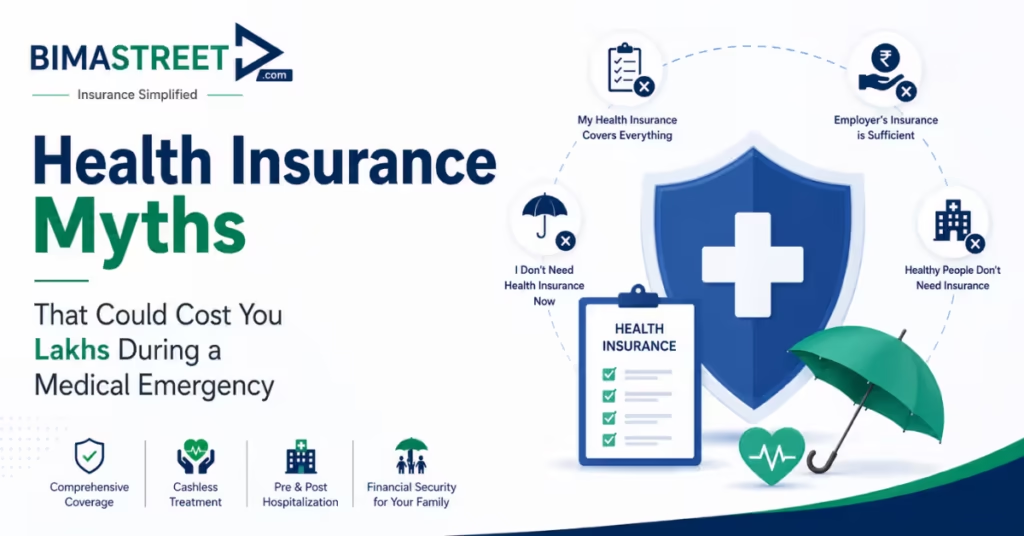
Health insurance is a financial safety net for individuals and families. Medical costs in India increase every year hence, a comprehensive health insurance policy protects your savings against sudden hospitalizations and unexpected medical emergencies But many end up either delaying the purchase of health insurance or buying an inappropriate one due to common misconceptions out there These Health Insurance Myths can result in claim rejection, insufficient cover or high out-of-pocket payments at the time of medical emergencies In this guideline we will discuss about the commonest Health Insurance Myths, explain their myths and facts and allow you to make smarter insurance decisions Why Understanding Health Insurance Myths Is Important Myths Can Lead to Costly Mistakes Most buyers refrain from reading their policy documents and instead rely on hearsay, social media posts or records that haven’t been updated in years This can result in: Choosing inadequate coverage. Missing important policy benefits. Facing claim delays. Paying unnecessary medical expenses. Financial stress during hospitalization. And knowing the facts means that you’ll choose the policy for your situations and never be caught off guard Myth #1 I’m Young, So I Don’t Need Health Insurance Fact: Medical Emergencies Can Happen at Any Age Numerous adults feel that health insurance is for the ones who are 40 or 50 years old. But as we know, accidents, infections, surgery and sudden illnesses happen at any age.  Purchasing health coverage early means lower premiums and helps you fulfil waiting periods before significant illnesses occur Myth #2 My Employer’s Health Insurance Is Enough Fact: Employer Coverage May Not Be Sufficient It is good that you have corporate health insurance but it is not enough for a long duration Employer-sponsored policies can: End when you change jobs. Offer limited coverage. Exclude certain treatments. Provide insufficient sum insured for your family An individual health insurance policy offers extra financial safety Myth #3 Every Medical Expense Is Covered Immediately Fact: Waiting Periods Apply you have seen the one of the biggest Health Insurance myths which is every treatment is covered from day One Most policies include waiting periods for: Pre-existing diseases. Specific illnesses. Maternity benefits. Certain surgeries Before buying coverage, always specify the waiting period for your policy. Myth #4 Cashless Means Everything Is Free Fact: Only Eligible Expenses Are Covered What is cashless hospitalization? Cashless hospitalization in India facilitates that your insurer pays for eligible hospital bills at network hospitals However, you need to pay for Non-medical expenses. Deductibles. Co-payments. Treatments excluded under the policy. When you read your policy carefully, this is to avoid the unpleasant surprises of extra costs. Myth #5 Health Insurance Covers Every Disease Fact: Policies Have Exclusions Every health insurance plan comes with exclusions Common exclusions may include Cosmetic procedures. Experimental treatments. Self-inflicted injuries. Certain non-medical expenses. Treatments during applicable waiting periods Being aware of these exclusions helps you avoid disappointment at the time of claim settlement. Myth #6 Buying the Cheapest Policy Saves Money Fact: Low Premium Doesn’t Always Mean Better Value Most of the buyers opt for the least premium without checking the policy features Instead, compare: Sum insured. Network hospitals. Waiting periods. Claim settlement record. Coverage benefits. Room rent limits. Co-payment clauses For just a little bit more premium you could have much better protection Myth #7 You Don’t Need to Disclose Existing Diseases Fact: Honest Disclosure Is Essential These pre-existing diseases are sometimes suppressed by applicants to prevent the premium This can result in: Claim rejection. Policy cancellation. Delayed claim settlement When buying health insurance, you must never miss your full medical history Myth #8 Claim Settlement Ratio Is the Only Thing That Matters Fact: Consider Multiple Factors While you can prioritize a large claim settlement ratio, it should not be your only deciding factor. Also evaluate: Customer service. Network hospitals. Claim process. Coverage benefits. Waiting periods. Policy exclusions A well-rounded policy will give you the best of both worlds. Tips to Choose the Right Health Insurance Policy Make an Informed Decision Before buying health insurance Compare multiple insurers. Read the policy wording carefully. Choose adequate coverage. Understand waiting periods. Check network hospitals. Review exclusions. Renew your policy on time Staying informed helps you get the maximum benefit from your policy Frequently Asked Questions Can young people benefit from health insurance? Yes. Early purchasing of health insurance typically translates to lower premium, better range and waiting periods completed prior to the onset of any major health problems. Is cashless treatment available at every hospital? Take the scenario that no. Cashless hospitalization is almost never available in a hospital outside your insurer’s network Can claims be rejected if I hide my medical history? Yes. One needs to ensure that none of the pre-existing diseases are withheld or information provided in this regard is wrong, as this can lead to rejection of claims or cancellation of policy Conclusion Believing common Health Insurance Myths can leave you financially vulnerable when medical emergencies occur. Whether it’s assuming employer insurance is enough, choosing a policy based only on premium, or misunderstanding waiting periods, these misconceptions can result in significant financial losses. Know your policy well, compare policies and their coverage with lots of care, honesty in disclosing your medical history is the only mantra in saving yourself and choosing a plan that fits you and your family So, remember the right decision today will not only save you lakhs of rupees but also come with a peace of mind when you need it the most At BimaStreet, we believe that the right guidance is just as important as the right policy. When you understand what insurance advisors look for before recommending a plan, you’re in a much better position to choose health insurance that protects your family today and in the years ahead
Best Health Insurance for Parents What Coverage Should You Look For - Health Insurance for Parents
BimaStreet Blogs, Health insurance

Best Health Insurance for Parents: What Coverage Should You Look For?

The years go by, the need for healthcare increases as our parents grow older. You will also be subjected to regular medical checkups, hospitalizations, surgeries and treatment of age related diseases that can cost a lot of money. These costs can financially strain the family without proper coverage. Hence, investing in the correct Health Insurance for Parents is indeed a thoughtful yet financially responsible decision An appropriate policy not only reimburses hospitalization charges but also serves as a mental balm during medical emergencies So choosing a plan is not as simple as possible. There are lots of insurers, choices in coverage and waiting periods, as well as policy exclusions Thus, it can be hard to know exactly what matters. In this article, we will help you understand what health insurance for parents is and how you should choose the top Health Insurance for Parents along with the coverage that you should have before purchasing Why Is Health Insurance for Parents Important? Rising Medical Costs Make Insurance Essential Healthcare costs are rising dramatically within India, a decade ago. When parents get older, the risk for chronic diseases like diabetes, hypertension, heart disease, arthritis and kidney complex increases as well. A comprehensive Health Insurance for Parents helps: Reduce the financial burden of hospitalization. Cover major medical treatments. Provide access to quality healthcare. Protect your savings during emergencies. Ensure timely treatment without worrying about expenses Purchasing health insurance in advance is also helpful to complete the waiting period before any major health issues occur. What Should Health Insurance for Parents Cover? Essential Features to Look For When you compare health insurance plans, ensure that the policy includes Hospitalization expenses Pre and post-hospitalization coverage Day-care procedures ICU expenses Ambulance charges Diagnostic tests Cashless treatment at network hospitals Annual health check-ups Domiciliary hospitalization (where available) Organ donor expenses (if covered) A comprehensive plan is crucial to save you money when an unexpected medical emergency arises. Check the Waiting Period Carefully Understand When Coverage Begins Waiting periods for the following are a part of most health insurance policies Pre-existing diseases Specific illnesses Maternity benefits (where applicable) Those with existing medical conditions, a slightly shorter waiting period may be better suited to the needs of parents. Which is why it is advisable to always compare waiting period clauses before buying a plan. Consider Coverage for Pre-Existing Diseases A Crucial Factor for Senior Parents A lot of the older parents now have conditions including: Diabetes High blood pressure Asthma Thyroid disorders Heart disease Most insurers will cover these once the relevant waiting period has passed.  Always mention the complete medical history of your parents so that there is no dispute at the time of claim settlement Look for a Wide Network of Hospitals Cashless Treatment Can Save Valuable Time Modern health insurance provides the most significant benefit of cashless hospitalization Choose an insurer with: A large network of hospitals. Good hospitals near your parents residence. Easy cashless claim facilities. Quick claim approval process This helps quick treatment when an emergency occurs without having to arrange huge amounts of money Choose an Adequate Sum Insured Don’t Underestimate Future Medical Costs Every year, health costs continue to increase. If one suffers from serious surgeries or stay in hospital for weeks, a low coverage sum may turn out to be insufficient When you choose a Health Insurance for Parents: Current medical conditions. Age. Inflation in healthcare costs. Family medical history. City of residence Opting for a sufficient sum assured gives you a better long-term cover Check Co-Payment and Sub-Limits Read the Fine Print Major Benefits Offered in Senior Citizen Health Insurance Plans Co-payment clauses Room rent limits Disease-specific limits Treatment caps This knowledge can enable you to prepare for how much you might pay out of pocket during admissions Compare Claim Settlement Ratio and Customer Service Reliability Matters A best health insurance company should provide A strong claim settlement record. Efficient customer support. Quick claim processing. Transparent policy terms. Easy cashless hospitalization For a better claim experience, do business with a reputable insurer Common Mistakes to Avoid Don’t Make These Buying Errors Avoid these common mistakes: Buying insurance based only on premium. Hiding pre-existing diseases. Ignoring waiting periods. Choosing insufficient coverage. Not checking hospital networks. Forgetting to compare policy exclusions. Delaying the purchase Purchasing the correct policy in advance can save you a lot of money later on Frequently Asked Questions What is the best age to buy health insurance for parents? The earlier, the better. It is also typically cheaper if one gets the policy at a younger age, and there may be shorter waiting periods until claims are covered Can parents with existing medical conditions get health insurance? Yes. The most important thing to remember is that all insurers cover pre-existing diseases, but nearly all of them have a waiting period wherein you cannot make claims against any illness related to the pre-existing one Should I buy a family floater or separate policy for parents? If either of your parents are above 60 or have pre-existing health conditions, stand alone health insurance plans would be a better option than adding them to the family floater plan Conclusion Selecting an appropriate Health Insurance for Parents is one of the best investments you can do to secure your family in future Having a good policy will solve one problem of rising medical costs reduce financial worries during emergencies and ensure that your parents get high-quality health care in their most urgent time of need. Always compare the coverage benefits, waiting periods, available hospital network, claim settlement history and co-payment clause and exclusions of policy before you purchase any plan The decision that you make today can go a long way in ensuring that your parents have financially secured and peace of mind for years to come. At BimaStreet, we believe that the right guidance is just as important as the right policy. When you understand what insurance advisors look for before recommending a plan, you’re in a much better position

Pre Existing Diseases and Health Insurance: What Is Covered and What Isn't?
BimaStreet Blogs, Health insurance

Pre-Existing Diseases and Health Insurance: What Is Covered and What Isn’t?

Purchasing a health insurance policy is one of the wisest financial decisions you can make now more than ever, with medical expenses mounting across India. But suppose you have an existing disease like diabetes, high blood pressure, asthma or thyroid disorders or heart diseases, and this leads you to ask yourself whether the health insurance policy will cover you And this is where having a proper awareness of Pre Existing Diseases Health Insurance comes in Some people think that if you have a previous medical condition, insurers will deny anyone who applies, while others feel as though every doctor bill is covered right away after purchasing a policy In actuality, neither of these is entirely true However, many health insurance companies do provide coverage against pre existing diseases but impose a waiting period and terms to the policy The better you know these rules before getting a policy, the less likely your claim will be rejected and you might not end up with a nasty surprise on your out-lay. In this guide, we will explain how Pre Existing Diseases Health Insurance works, what is covered and not covered, and how to choose the right policy based on your health requirements What Are Pre Existing Diseases? Understanding the Definition A pre existing disease is an illness, injury or medical condition that a person has been diagnosed with or treated for before the purchase of a health insurance policy Common examples include: Diabetes High blood pressure (Hypertension) Asthma Thyroid disorders Heart disease Kidney disease Arthritis Cancer (depending on medical history) High cholesterol Chronic liver disease When obtaining a policy, you have to truthfully tell insurance companies about these conditions Does Health Insurance Cover Pre Existing Diseases? Yes But After the Waiting Period Fortunately, most Pre Existing Diseases Health Insurance policies primarily include coverage for pre existing diseases. Nevertheless, coverage often starts only once the policyholder has served the determined waiting period. The waiting time period typically varies but is approximately 2 to 4 years depending on the insurance company and type of plan chosen Pre existing illnesses are typically not reimbursed in this period. After the waiting period expires and the policy has been renewed without a break, coverage will usually be available for those conditions Why Do Insurance Companies Have Waiting Periods? Protecting the Insurance System To keep health insurance companies from misusing this feature, waiting periods are used to ensure fairness Absent waiting periods, individuals could buy insurance after being diagnosed with a costly illness and habitually file claims just afterward Waiting periods help insurers: Reduce fraudulent claims. Maintain affordable premiums. Ensure long-term policy sustainability. Protect genuine policyholders What Is Covered Under Pre Existing Diseases Health Insurance? Coverage After the Waiting Period After the specified waiting period, a number of policies offer coverage for qualified expenses associated with pre existing conditions such as: Hospitalization expenses Doctor consultation charges Surgery costs ICU expenses Medicines during hospitalization Diagnostic tests Day-care procedures (if covered) Cashless treatment at network hospitals (where applicable) This is determined by the finer print of a certain policy and any exclusions What Isn’t Covered? Common Exclusions Also, there may be situations for which you are still not covered even after getting health insurance These may include: Expenses during the waiting period. Diseases not disclosed while buying the policy. Cosmetic procedures. Experimental treatments (unless specifically covered). Treatments excluded under the policy. Non-medical hospital expenses. Self-inflicted injuries The time of purchase is when the undecipherable policy wording should always be reviewed carefully Why Full Disclosure Is Important Never Hide Your Medical History There are some buyers who conceal pre existing health conditions to earn lower premiums or gain lesser scrutiny This can be a costly mistake. While processing claims, insurance companies crosscheck medical records. If they find a pre existing disease was intentionally concealed, they may deny the claim or even cancel the policy Always disclose: Existing illnesses Previous surgeries Ongoing medications Medical history Previous hospitalizations This facilitates less hassle in the settlements of claims Tips to Choose the Right Health Insurance Policy Compare Before You Buy While comparing the policy for pre existing diseases, consider Waiting period duration Sum insured Premium Network hospitals Cashless treatment availability Claim settlement ratio Co-payment clauses Disease-specific exclusions Renewal benefits Carefully patching up your policy helps you find the best coverage that would suit your needs. Common Mistakes to Avoid Protect Your Future Claims Avoid these common mistakes: Buying insurance only after serious illness. Hiding pre-existing diseases. Ignoring waiting periods. Choosing insufficient coverage. Not renewing the policy on time. Focusing only on low premiums If it gets done today, it will be a lot easier to deal with these financial bumps in the road should they come in the future Frequently Asked Questions Can I buy health insurance if I have diabetes? Yes. While nearly all insurers cover diabetes, there is generally a waiting period before you can claim for any conditions related to your injury or illness Will my claim be rejected if I have a pre-existing disease? Not necessarily. If you registered the condition truthfully and fulfilled any relevant waiting period, qualified claims are usually covered in accordance with policy terms Can I reduce the waiting period? Others provide waiting period-reducing riders or plans. Do not settle on a policy before comparing. Conclusion Pre Existing Diseases Health Insurance becomes necessary if one already has a prior medical ailment or is seeking full-fledged health cover for any point in future Although pre existing diseases are covered by the majority of insurers, this coverage is usually not available during the agreed waiting period. A good policy can help you claim without the hassle, but getting it is just the start with proper disclosure of your entire medical history, understanding of waiting periods and exclusions from cover and renewal of your policy without breaks By planning ahead you and your family can avoid the rising costs of health services while gaining peace of mind At BimaStreet, we believe that the right guidance is just as

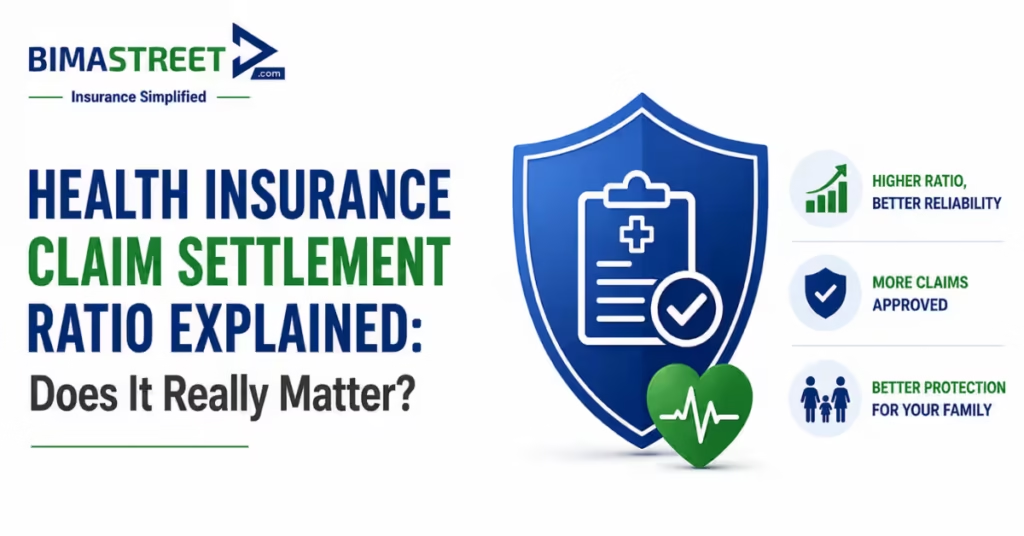
Health Insurance Claim Settlement Ratio Explained Does It Really Matter
BimaStreet Blogs, Health insurance

Health Insurance Claim Settlement Ratio Explained: Does It Really Matter?

Purchasing health insurance is not simply about finding the cheapest premium or maximum coverage The Claim Settlement Ratio Health Insurance is one of the crucial parameters that we used to analyze while finalizing which policy should we go ahead with. Because a policy is only good if an insurer pays out during its time of need But there are many who do not understand what the Claim Settlement Ratio Health Insurance stands for Some of you might think that if we go with the insurance company with a higher claim settlement ratio then we would not have to deal with the bumps while claiming and some just ignore this factor completely The reality is a bit of both In this guide, we’ll explain what the Claim Settlement Ratio Health Insurance means, how it’s calculated, why it matters, and what other factors you should consider before buying a health insurance policy What Is the Claim Settlement Ratio in Health Insurance? Understanding the Basics Claim Settlement Ratio in Health Insurance is basically the ratio of the number of claims settled to the total received by an insurance company in a financial year Say an insurer gets 10,000 health insurance claims and settles 9,700 of them. Its claim settlement ratio will be 97%. A higher claim settlement ratio typically means that the insurer has settled a significant percentage of claims but this should not be your only criterion to consider when evaluating an insurance compan Why Does the Claim Settlement Ratio Matter? A Key Indicator of Reliability This means that if an insurance company has a good claim settlement ratio, the policyholders can be assured that it has been processing and settling genuine claims effectively over the years It can help you: Assess an insurer’s reliability. Compare different insurance companies. Understand the company’s claim-handling performance. Confidence before purchasing a policy Yet, insurers with high settlement ratios also can deny claims that don’t meet the condition of their policy How Is the Claim Settlement Ratio Calculated? A Simple Formula The claim settlement ratio is calculated by dividing the number of claims settled by the total number of claims received and multiplying the result by 100 For example: Total claims received: 20,000 Claims settled: 19,200 Claim Settlement Ratio = (19,200 ÷ 20,000) × 100 = 96% This percentage can be interpreted as the overall performance of an insurer in claim settlement for a particular duration Does a Higher Claim Settlement Ratio Always Mean Better? Not Necessarily A higher Claim Settlement Ratio Health Insurance is a good indicator, but just having a high settlement ratio doesn’t mean that the insurer is also your best A high ratio doesn’t reveal: How quickly claims are settled. The average claim amount paid. Customer service quality. Reasons behind claim rejections. According to the cashless claim lay process Never solely depend on a claim settlement ratio, evaluate multiple thing Other Factors to Consider Before Buying Health Insurance Look Beyond the Numbers Compare These To Choose Health Insurance Policy Sum insured Premium amount Waiting periods Network hospitals Cashless claim facility Room rent limits Co-payment clauses Policy exclusions Day-care procedure coverage Customer support A well balanced comparison helps you select the policy that most suits your healthcare needs Common Reasons Why Health Insurance Claims Get Rejected Avoid These Mistakes Even insurers who are known for good claim settlement ratio may reject claims due to: Non-disclosure of pre-existing diseases. Policy waiting period not completed. Expired or lapsed policy. Treatment excluded under the policy. Incorrect or incomplete documents. Fraudulent claims. If at all possible, read the policy in detail and provide as much detail and accuracy during your claim as you can Tips to Improve Your Claim Approval Chances Best Practices for Policyholders To ensure a smooth claims experience Disclose your complete medical history. Renew your policy before it expires. Understand waiting periods and exclusions. Choose network hospitals whenever possible. Keep all medical records and bills safely. Inform your insurer immediately after hospitalization Taking these steps can help to simplify the claims process immensely Frequently Asked Questions What is considered a good claim settlement ratio? Usually, insurers with a high claim settlement ratio year after year are trustworthy. There, it is also a must to compare the policy features, coverage and customer service as we Can a claim still be rejected even if the insurer has a high settlement ratio? Yes. Policies can still deny a claim if it does not meet the policy terms, waiting periods, or documentation requirements. Should I buy insurance based only on the claim settlement ratio? No. While you can check the claim settlement ratio, the coverage features, exclusions, premium quote from others, hospital network and waiting period for declaring a pre-existing disease also add up to your decision in choosing a health insurance policy based on the claim settlement ratio Conclusion Claim Settlement Ratio Health Insurance is considered one of the most important factors that indicate how well an insurer has been handling health claims, but it should never be the sole factor guiding your decision. A large ratio may simply be indicative of a strong record of settlements, but it does not mean that all claims submitted will be approved. When purchasing a health insurance policy, consider the claim settlement ratio in conjunction with factors such as policy coverage, waiting periods, exclusions, hospital network premium and customer service. Investing in a good decision today can mean financial freedom and peace of mind tomorrow when medical emergencies do arise At BimaStreet, we believe that the right guidance is just as important as the right policy. When you understand what insurance advisors look for before recommending a plan, you’re in a much better position to choose health insurance that protects your family today and in the years ahead
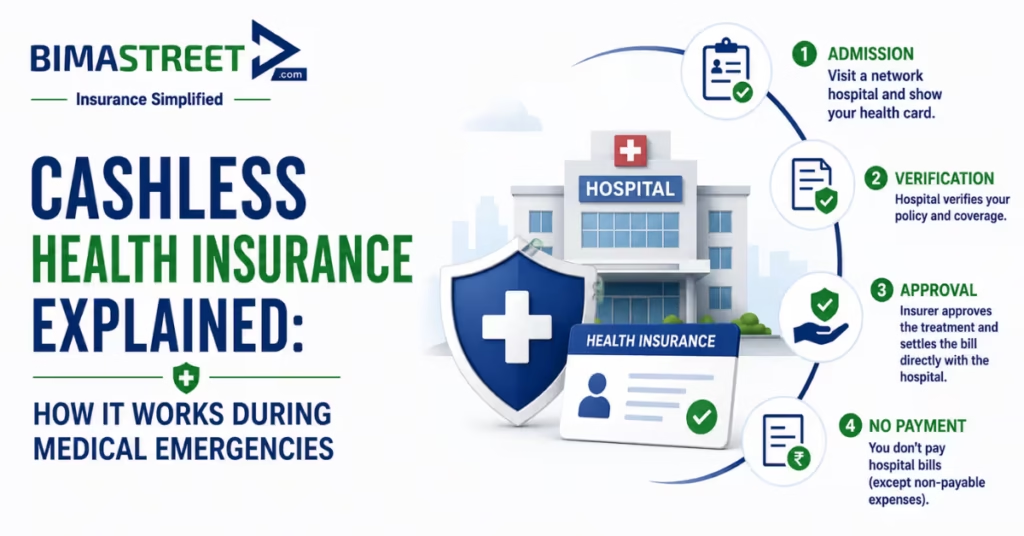
Cashless Health Insurance Explained How It Works During Medical Emergencies
BimaStreet Blogs, Health insurance

Cashless Health Insurance Explained: How It Works During Medical Emergencies

Emergency medical conditions tend to knock at the door uninvited, with emotional tension and financial unpredictability Be it an urgent accident, heart failure or emergency surgery, at times arranging finances within a very short span of time can be stressful. This is where Cashless Health Insurance comes in as a savior. Cashless health insurance is when a policyholder visits a hospital that has been included in the cashless network of hospitals, they don’t need to pay for the whole hospitalization bill beforehand, unlike traditional reimbursement claims Instead the insurance firm settles with the hospital directly for whatever is approved, which makes the whole process of treatment more seamless This guide explains the functioning of Cashless Health Insurance policy, its benefits, eligibility conditions, claim process as well some awesome tips which going to save a ton of your energy and your family when medical emergencies arise. What Is Cashless Health Insurance? Understanding the Concept Cashless Health Insurance is a health insurance feature that provides policy holders with the flexibility to receive treatment at an insurer’s network hospital without having to pay for covered medical expenses in full upfront Once you validate your policy details and get authorization from an insurance company or third party administrator (TPA), the hospital directly collaborates with the insurer for eligible expenses The insured owner is only liable for any out-of-pocket expenses such as non medical items, deductions and exclusions not covered by the policy How Does Cashless Health Insurance Work? Step-by-Step Claim Process The idea behind the cashless claim process is making hospitalization easier. Step 1: Visit a network hospital associated with your insurer. Step 2: Show your health insurance card or policy details at the hospital’s insurance desk. Step 3: Fill out the cashless claim request form Step 4: The hospital sends a pre-authorization request to the insurance company or TPA Step 5: The insurer reviews the request based on your policy coverage. Step 6: After approval, the hospital begins treatment without requiring payment for covered expenses Step 7: Once treatment is completed, the insurer directly settles eligible bills with the hospital. This process significantly reduces financial stress during emergencies What Are Network Hospitals? Why They Matter Network hospitals refer to those networks of hospital facilities which are tied up with the Insurance Companies for cashless treatment. Choosing a network hospital offers several advantages Faster claim processing. A more direct type of settlement which take place between the hospital and insurer. Reduced paperwork. Better coordination during emergencies. Less financial burden on admission Always confirm the list of network hospitals in your city from the insurer before buying a policy Benefits of Cashless Health Insurance Why It Is Becoming More Popular Benefits of Cashless Health Insurance: There is no need to figure big amounts of money on a remit basis. Faster hospital admission process. Settlement of qualifying expenses by direct bill Less paperwork than for reimbursement claims. Financial peace of mind in time of emergencies Access to an expansive network of hospitals These benefits make Cashless Health Insurance one of the most valuable features of modern health insurance plans Cashless vs Reimbursement Health Insurance What’s the Difference? Both options assist with medical bills but have a different claims process Cashless Health Insurance Available only at network hospitals. The insurer directly pays eligible bills. Less paperwork. Faster financial assistance Reimbursement Claims In network or out of network hospitals. You pay hospital bills first. Submit documents later. The insurer, only after validation, pays such costs If hospitalization happens, knowing both methods equips you with the decision on which route to take Situations Where Cashless Claims May Be Rejected Common Reasons Declines on cashless requests can take place for Policy lapse. Waiting period not completed. Treatment excluded under the policy. Incorrect information. Insufficient documentation. The hospital is out of the network of the insurer However, in the case of a cashless request being denied reimbursement for treatment is possible if treatment otherwise falls under the ambit of the coverage provided under policy terms Tips for a Hassle-Free Cashless Health Insurance Claim Follow These Best Practices To improve your claim experience: Keep your health insurance health card handy. Know your nearest network hospitals. Notify your insurer as soon as the hospitalization occurs. Carry valid identity proof. Check coverage and exclusions in your policy. Renew your policy on time. Hold on copies of all medical records and bills It saves time if you prepare before an emergency. Frequently Asked Questions Is cashless treatment available at every hospital? Right. Cashless is usually only available in a hospital which forms part of your insurer’s network. Will the insurer pay the entire hospital bill? The eligible expenses covered under this policy are paid by the insurer. It is generally the responsibility of an insured to pay for non-covered items, including problem issues, high deductions or co-payments, and out-of-pocket exclusions Can planned surgeries also be covered under cashless health insurance? Yes. In the event of a planned hospitalization, cashless claims processes are permitted by most insurers as long as pre-authorization is obtained within the timelines specified in the policy document Conclusion Why find funds for your treatment when medical emergencies are already stressful Cashless Health Insurance reduces this burden by providing eligible policyholders the ability to receive treatment at network hospitals without paying for their entire hospital bill upfront Still, you need to get without question acquainted with your policy, the network medical center list & know the claims system alongside a few fundamental documentation Selecting the right cashless health insurance plan and having proper awareness can help you and your family take care of your healthcare when needed without worrying about finances At BimaStreet, we believe that the right guidance is just as important as the right policy. When you understand what insurance advisors look for before recommending a plan, you’re in a much better position to choose health insurance that protects your family today and in the years ahead
Health Insurance Waiting Period Explained: What Most Buyers Don't Know
BimaStreet Blogs, Health insurance

Health Insurance Waiting Period Explained: What Most Buyers Don’t Know

Health Insurance waiting period is one such factor that almost everyone remembers just before finalizing a policy, after letting go of an important opportunity. Purchasing health insurance is the smartest thing anyone can do in their life but they lose out on essential elements like a waiting period? Though your policy may be active the moment you actually pay for it, not every healthcare expenditure is covered from day one. And as soon as their insurance is purchased, most policyholder tend to think that all of their hospitalisation expenses can be claimed But for some illnesses, treatments and pre-existing diseases, there is a waiting period implemented during which time insurance companies do not cover the costs associated with that ailment If you are not aware of these waiting periods, your claim might be delayed or even denied Through this guide, you will understand everything regarding the Health Insurance Waiting Period, types of waiting periods, why insurers keep them and how to find a policy that best meets your health requirements What Is a Health Insurance Waiting Period? Understanding the Basics A Health Insurance Waiting period is the time you need to wait before making claims for certain diseases, treatments or medical problems under the health insurance policy Your policy comes into effect the moment you pay the premium, yet certain claims do not become payable until after a specified waiting period When you apply, there is a wait period which are based on: The insurance company The type of policy The illness or treatment Whether the condition is pre-existing Awareness of these rules keeps you from getting an unpleasant surprise while settling a claim Why Do Insurance Companies Have Waiting Periods? Preventing Misuse of Insurance Waiting periods help to minimize the chance that people will buy health insurance in response to a diagnosis or when they need urgent care, as naturally these people would not be able to bring about a positive change in outcome outcome. Waiting periods help insurers: Reduce fraudulent claims Maintain affordable premiums Justifiable coverage for all insured persons. Encourage long-term health insurance planning These terms safeguard true policyholders and insurers Types of Health Insurance Waiting Period Initial Waiting Period Many health insurance policies have a waiting period of roughly 30 days from the beginning of the policy. At this stage, claims are only covered when it comes to accidents but not for anything else. Waiting Period for Pre-Existing Diseases A pre-existing disease means you already had a disease, like diabetes, hypertension, asthma or thyroid disorders before taking the policy Insurers generally have a waiting period of somewhere between 2 to 4 years before availing coverage for expenses pertaining to these conditions. Disease-Specific Waiting Period There are specific waiting periods, irrespective of being pre-existing. Examples include: Hernia Cataract Kidney stones Joint replacement Varicose veins Gallbladder surgery There is normally a waiting time of 1 to 3 years for such conditions Maternity Waiting Period Health insurance plans that include maternity benefits usually have waiting periods ranging from 9 months to 4 years, depending on the insurer Couples planning a family should purchase health insurance well in advance What Happens During the Waiting Period? Are Any Claims Allowed? Yes. Most illnesses are excluded during the waiting period while accidental injuries usually receive immediate coverage once the policy starts, per terms of a policy After the waiting period, routine illnesses will start to be covered. Can You Reduce the Health Insurance Waiting Period? Ways to Get Faster Coverage Several insurers provide alternate methods to shorten the amount of waiting time, such as: Purchasing higher coverage plans Buying specific add-on covers Porting from another insurer with continuity benefit Maintaining uninterrupted policy renewals Before making any decision, always compare policy policies Common Mistakes Buyers Make Avoid These Costly Errors Common missteps among policy holders include: Not reading waiting period clauses Hiding pre-existing illnesses Buying insurance only after diagnosis Ignoring disease-specific waiting periods Not comparing waiting periods among insurers Knowing these won’t lead to claims of regret. Tips to Choose the Right Health Insurance Policy Compare Before You Buy Before purchasing health insurance, compare Waiting period duration Sum insured Premium Network hospitals Claim settlement ratio Day-care coverage Room rent limits Co-payment clauses Policy exclusions Choosing the correct plan helps you to stay financially fit in a medical emergency Frequently Asked Questions Is every claim rejected during the waiting period? No. Accidental hospitalization is covered from day one, whereas specialized illnesses can only be claimed after the waiting period has been fulfilled Can waiting periods be waived? Select insurers provide some waiting period concessions in the form of special plans or add-on benefits, but keep in mind that this is not a universal feature across all insurers. Does every insurer have the same waiting period? Yes, waiting periods are unique to each insurer and type of policy plan you choose Conclusion One of the most important things to do before buying any kind of health insurance policy, is to understand the health insurance waiting period This feature helps you understand the waiting period for different medical conditions before your coverage is in effect, allowing surprises when the settlement of a claim Choose insurance after carefully comparing the waiting periods, coverage, exclusions and claim settlement records of each policy instead of a decision being based only on premium The earlier you buy health insurance, the better it is for you and your family, but continuing coverage ensures timely financial protection during times of a medical emergency At BimaStreet, we believe that the right guidance is just as important as the right policy. When you understand what insurance advisors look for before recommending a plan, you’re in a much better position to choose health insurance that protects your family today and in the years ahead
Mediclaim vs Health Insurance Which One Is Better for Indian Families
BimaStreet Blogs, Health insurance

Mediclaim vs Health Insurance: Which One Is Better for Indian Families?

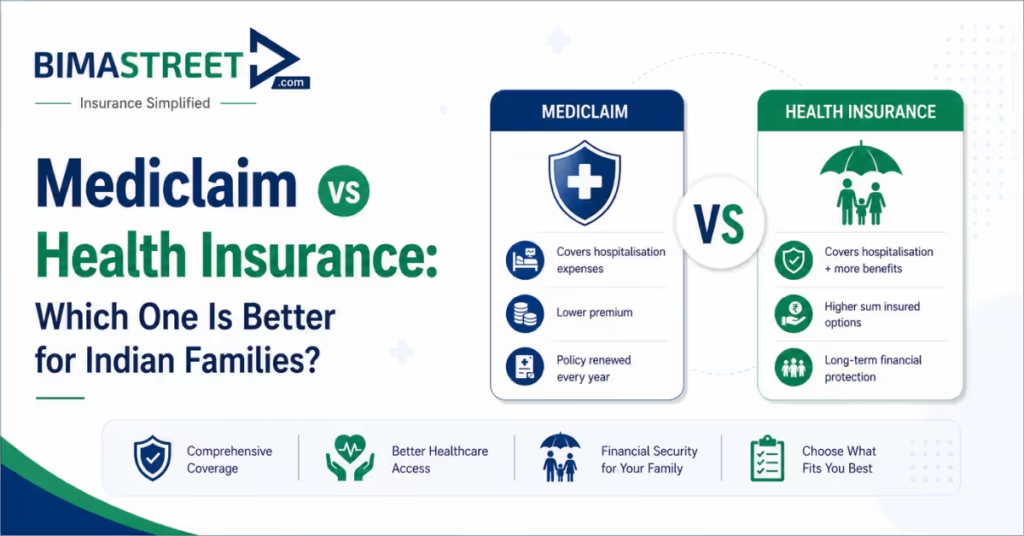
Medical emergencies can strike at any time and the treatment cost in India increases year on year Healthcare expenses can start breaking the bank with hospitalization and surgeries as well as treatments for critical illnesses. Which is why the right insurance policy is so important. Mediclaim and Health Insurance are often used interchangeably by many people, but they are different. Though both of them provide monetary cover in the event of medical emergencies, their coverage, benefits and flexibility vary largely In this article, we will discuss the differences between Mediclaim vs Health Insurance plans as well as their pros and cons, so that you can select what suits you and family best What Is Mediclaim? A Basic Hospitalization Cover Mediclaim policy is an essential insurance plan that primarily protects against hospitalization costs due to illness or accident It compensates the eligible medical spending or provides cashless treatment at network hospitals subject to the detailed policy conditions Mediclaim generally covers: Hospitalization expenses Room rent (within policy limits) Doctor consultation charges Surgery expenses Nursing charges Medicines during hospitalization Mediclaim policies are the simplest, cheapest and for a person who wants to get basic medical coverage What Is Health Insurance? Comprehensive Financial Protection Health Insurance is more comprehensive than a Mediclaim policy.  In addition to inpatient hospitalization itself, many medical health insurance plans will be added with a few secondary advantages which control the general costs of healthcare Health Insurance may cover the following depending on the policy Hospitalization expenses Day-care procedures Pre-hospitalization expenses Post-hospitalization expenses Ambulance charges Critical illness benefits Preventive health check-ups Organ donor expenses Maternity benefits (selected plans) AYUSH treatment (where applicable) Health Insurance becomes more holistic with these added coverages Mediclaim vs Health Insurance: Key Differences Understanding the Comparison While both cover you for medical emergencies, there are some major differences between the two Mediclaim Covers mainly hospitalization expenses. Usually offers limited coverage. Lower premium. Simple policy structure. Suitable for basic healthcare needs Health Insurance Offers wider medical coverage. Includes multiple healthcare benefits. Higher sum insured options. Better long-term financial protection. More flexible policy options These differences help you select a policy as per your family healthcare needs. Benefits of Mediclaim Why Some People Choose Mediclaim Mediclaim policies provide several advantages Affordable premiums Easy to understand Covers hospitalization expenses Cashless treatment at network hospitals Financial support during medical emergencies If you are looking for just basic hospitalisation coverage Mediclaim is still a viable option. Benefits of Health Insurance Why Comprehensive Coverage Matters Health Insurance provides more coverage and benefits that can reduce out-of-pocket medical costs significantly Key advantages include: Comprehensive medical coverage Higher sum insured options Coverage before and after hospitalization Day-care procedure benefits Preventive health check-ups Critical Illness cover offered in select plans Many policies have No Claim Bonus A truly cashless hospitalization across wide-spread networks of hospitals Which Policy Is Better for Indian Families? Choosing Based on Your Needs While comparing Mediclaim vs Health Insurance, which is better to choose depends on your family’s healthcare needs along with family planning financially. Choose Mediclaim if: You want affordable hospitalization coverage. Your budget is limited. You need basic financial protection Choose Health Insurance if: You want comprehensive healthcare coverage. You are caring for children or elderly parents. You want higher coverage limits. You are preparing for medical safety over the years Comprehensive Health Insurance is, in most cases, a better value for your typical Indian family because it covers more medical conditions and offers more benefits.   Factors to Consider Before Buying a Policy Compare Before You Decide Before purchasing any policy, compare Sum insured Premium amount Waiting period Network hospitals Claim settlement process Co-payment clauses Room rent limits Exclusions Renewal benefits No Claim Bonus Analyzing these factors helps you select the policy that best fits your family healthcare requirements Common Mistakes to Avoid Don’t Make These Insurance Buying Mistakes Avoid these common errors: Buying only based on low premium. Ignoring waiting periods. Not reading exclusions. Choosing insufficient coverage. Delaying health insurance purchase. Not disclosing pre-existing illnesses. Forgetting annual renewals By spending a little time analyzing the policy, you can avoid thousands of dollars in future expenses Frequently Asked Questions Is Mediclaim the same as Health Insurance? No, mediclaim usually covers hospitalization expenses whereas health insurance often also provides larger medical coverage with additional benefits Which policy is more affordable? Mediclaim policies are likely to be cheaper because they give limited scope of coverage as compared with comprehensive Health Insurance Which is better for a family? Comprehensive Health Insurance is a better option for most families as it covers all your significant medical expenditures and provides you with higher financial protection. Conclusion Mediclaim vs Health Insurance Choosing the right plan Both Mediclaim and health insurance serve an important purpose but choosing one over another depends on your healthcare needs, budgets and long-term financial goals Mediclaim covers just the basics of hospitalization at a low premium, while Health Insurance provides more extensive coverage for a much larger spectrum of medical expenses For Indian families seemingly desiring holistic financial protection against increasing healthcare expenses, a full-fledged Health Insurance policy tends to be usually the additional favorable This comparison helps in taking the right decision as you choose only a plan that gives complete value for the insurance covering your loved ones taking into consideration all policy features, benefits, exclusions and claim settlement records At BimaStreet, we believe every family deserves coverage that matches their unique needs. Understanding how much health insurance coverage you really need is the first step towards making a confident and informed insurance decision

Family Floater vs Individual Health Insurance Which Policy Saves More Money
BimaStreet Blogs, Health insurance

Family Floater vs Individual Health Insurance: Which Policy Saves More Money?

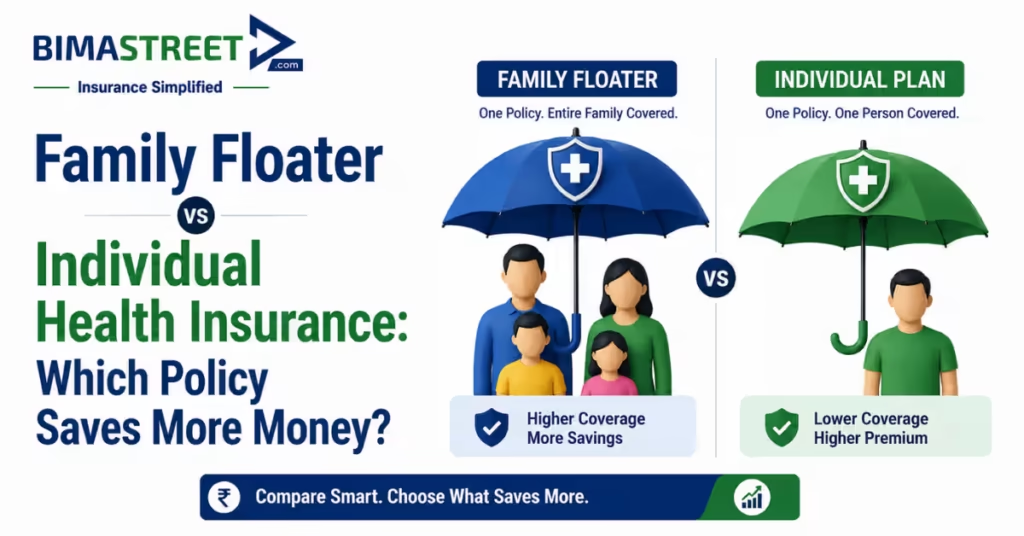
It is essential to select the best health insurance policy for you and your family as it will be one of the most significant financial choices you will make in your life ahead As annually more and more health care costs are escalating, so having sufficient wellbeing insurance coverage is not a choice but rather a necessity. But, most of them face a challenge between Family Floater vs Individual Health Insurance. Finally, the other question is Whether to buy one policy for the family or each family member should be on a separate health insurance plan? The response is determined by your family size, age, medical history and economic goals This guide breaks down Family Floater vs Individual Health Insurance, how each of those work, their pros and cons, and which option can save you the money in the long run What Is Family Floater Health Insurance? One Policy for the Entire Family A Family Floater Health Insurance policy comes with a common sum insured which can be utilized by all members covered under the same policy. A family floater plan (say a ₹10 lakh plan that covers you, your spouse and two children) allows any of the insured to avail of cover as and when he/she is hospitalized till the limit is exhausted This policy suits young families, as the chance that several family members would require hospitalization at the same time is minimal. What Is Individual Health Insurance? Separate Coverage for Every Person Individual Health Insurance A separate sum insured is provided for each insured person. If there are four family members with ₹5 lakh policy each, all four will receive a cover amount of ₹5 lakh each When a claim is made by one party, it doesn’t decrease the coverage available to any other policyholder. This alternative is especially useful for those families who have parents or any other member in their family with prior ailments   Family Floater vs Individual Health Insurance: Key Differences Understanding the Main Comparison Key Points to Consider While Validating Family Floater vs Individual Health Insurance: Coverage structure Premium cost Number of family members Age of insured persons Medical history Claim flexibility Long-term affordability This helps to understand the differences and pick a policy suitable to your health care needs. Benefits of Family Floater Health Insurance Why Many Young Families Prefer It Advantages of a family floater plan are as follows: Family plan with single premium Less pricey than buying multiple separate policies. Easier policy management. Cumulative sum insured for family members. Convenient renewals If your family members are generally healthy, a family floater policy can provide excellent value for money Benefits of Individual Health Insurance Why Separate Policies Can Be Better There are also unique benefits to individual plans: Individual coverage for each insured person. Others are not influenced by the claim made by one person. Better for senior citizens. Best for Chronic Illness You have more freedom regarding your coverage amounts Other changes in cover and multi-policies often demand individual policies for families to meet their healthcare needs Which Policy Saves More Money? It Depends on Your Family’s Needs Family Floater Vs Individual Health Insurance: Which One Do You Need? A Family Floater policy is likely to help save you more if: You are a young couple. You have small children. There are no significant background diseases in your family. Everyone is generally healthy If Individual Health Insurance is a better investment, You have elderly parents. A relative regularly incurs medical expenses. Multiple members may require hospitalization. You want each of them given separate protection A bad policy choice either results in unnecessarily high premiums or underinsurance Factors to Consider Before Buying Health Insurance Make an Informed Decision Before purchasing any policy, evaluate Age of each family member. Existing medical conditions. Number of dependents. Annual healthcare expenses. Waiting periods. Hospital network. Claim settlement ratio. Room rent limits. Day-care procedures. Policy exclusions This move allows you to make a more informed financial decision by weighing these features against each other Common Mistakes to Avoid Don’t Make These Health Insurance Errors Avoid these common mistakes: Choosing the cheapest premium only. Ignoring waiting periods. Not reading policy exclusions. Buying insufficient coverage. Forgetting annual renewals. Not comparing different insurers. Delaying health insurance purchase. The right policy today can save you a world of financial heartache tomorrow Frequently Asked Questions Is Family Floater cheaper than Individual Health Insurance? Generally, yes. Family floater plans tend to be cheaper than independent policies for each member of the family, particularly for young and healthy families Can senior citizens be included in a Family Floater policy? Yes, but if parents are added it could more than double the premium. In many instances, buying separate individual plans for seniors is likely to be a better solution Can I switch from Family Floater to Individual Health Insurance? Yes. Several insurers also allow policy holders to switch from a family floater plan to an individual policy as per their terms Conclusion Family Floater vs Individual Health Insurance not about finding the better of the two but selecting what is best for your family. If you have a young and healthy family, you can get significant cover via a family floater plan but will be charged less in premium. If your household contains an aging parent or high-risk individuals, on the other hand, individual health insurance might prove considerably more beneficial in a long-term financial perspective You may also compare the various features, limits of coverage, waiting periods, eligible hospital network, settlement records for claims before arriving at a decision One cannot emphasize the importance of investing in good health insurance here as financially protecting your family today will lead to peace of mind tomorrow. At BimaStreet, we believe every family deserves coverage that matches their unique needs. Understanding how much health insurance coverage you really need is the first step towards making a confident and informed insurance decision.

How Much Health Insurance Coverage Do You Really Need Based on Your Income
BimaStreet Blogs, Health insurance

How Much Health Insurance Coverage Do You Really Need Based on Your Income?

Purchasing health insurance is a critical financial move, but one question tends to consumers.. How much health insurance coverage do I actually need You either get a lesser coverage to trek down the premiums or go with a higher coverage option even when it may not be in line with your needs. Either of those choices can put unwelcome pressure on your finances Not just your income, the right health insurance coverage will be based on the health needs of your family members, their medical history, lifestyle and future financial needs If you’re planning to buy health insurance, here’s a practical way to estimate the coverage that may be suitable for your situation Why Choosing the Right Coverage Matters The main purpose of health insurance is to de-stress the economic toll of a medical emergency. But if you are not adequately covered, then i.e. the coverage amount is low you might have to shell out a large chunk of the hospital bill from your own savings. Alternatively, purchasing well over coverage amounts you require without knowing what your needs are can drive up premium costs unnecessarily This balance is what you need to find. Is Income the Only Factor? It is a common misconception that the only factor influencing how much health insurance you need to buy is how much one earns. In reality, it is not an easy question and experienced insurance advisors consider many factors before suggesting a coverage amount Income Is Only One Part of the Picture Your monthly income certainly affects your ability to pay premiums However, advisors also look at: Family size City of residence Existing medical conditions Lifestyle Healthcare preferences Future financial goals A person earning ₹15 lakh per year with ageing parents may need more coverage, compared to a person earning ₹20 lakh but who is living alone Estimate Coverage Based on Your Income While every family is different, this table can serve as a starting point Suggested Health Insurance Coverage This should not be considered a Fixed rule. Your real coverage depends on income and health care. Utilize the extension as much of the time Other Factors That Affect Coverage Needs Income is critical, but it is only part of the equation Family Responsibilities For example, if you have a spouse and children or parents only financially dependent on you then higher coverage can be much better for protection Healthcare Costs in Your City City-wise difference in cost of medical treatment. Families residing in metro cities typically have a greater financial burden for hospitalization, compared to those living in smaller towns. Existing Medical Conditions If any close relatives in the family previously have diabetes, hypertension, Heart disease etc. then we may think about safe and wider coverage Future Healthcare Plans Think beyond today’s situation. The possibility of children, ageing parents, or other long-term health care expenses can also affect the insurance you buy When Should You Increase Your Coverage? Health insurance should not remain the same throughout your life. You may want to review your policy after major life events such as: Marriage Birth of a child Increase in income Purchasing a home Parents becoming financially dependent Rising healthcare costs This is why reviewing your policy every few years ensures that the coverage you have continues to meet your families needs Common Mistakes While Choosing Coverage While selecting their required coverage amount many buyers make blunders. Some common ones include: Choosing the lowest coverage to reduce premium Depending only on employer health insurance Ignoring future medical inflation Buying the same coverage as friends or relatives Not reviewing the policy after major life changes Remember, health insurance should be based on your personal situation-not someone else’s   Quick Coverage Planning Checklist Before deciding your health insurance coverage, ask yourself: How many people need coverage? What is my annual income? Do I have financial dependents? Are there senior citizens in the family? Do we have any existing medical conditions? Can I comfortably afford the premium? Will this coverage still be enough five years from now? Conclusion Selecting the right protection for your well-being care is about greater than simply your income every month. This means juggling your family’s health care needs, financial obligations and future medical costs. Instead of choosing insurance based only on premium prices or general suggestions, take time to think through your specific scenario. An appropriately designed health insurance plan can safeguard your family health and you financially in the years to come. At BimaStreet, we believe every family deserves coverage that matches their unique needs. Understanding how much health insurance coverage you really need is the first step towards making a confident and informed insurance decision

What Insurance Advisors Look for Before Recommending a Health Insurance Plan - Health Insurance Advisor
BimaStreet Blogs, Health insurance

What Insurance Advisors Look for Before Recommending a Health Insurance Plan

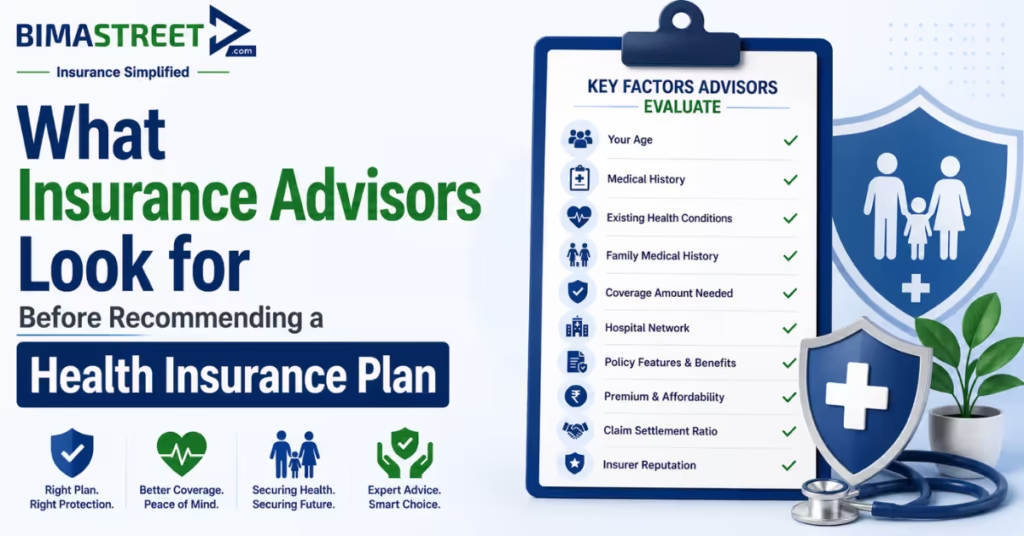
Separating the good from bad health insurance plans may seem like child’s play in the beginning. The average consumer compares premiums, considers the limit amount, and sells the policy that seems to offer the best value. However, seasoned Health insurance advisors don’t base their recommendations like that. One family’s healthcare needs, financial goals and medical risk is not another clinical scenario. A policy that suits one may not do so for another. A health insurance advisors looks at much more than the brochure before suggesting any plan, which is why Advisors look beyond just price to your lifestyle, family profile, future healthcare needs and the policy’s long-term value Understanding this approach can help you make better insurance decisions and choose a plan that truly protects your family Why Health Insurance Advisors Don’t Recommend the Same Policy to Everyone There are supposedly many “best” health insurance policies. In reality, there isn’t. An Health insurance advisors knows that different families have their own way of prioritizing Older individuals are the reason for higher coverage required by multiple families While others may need maternity benefits, young working professionals may strive for something cheaper to protect themselves from being thrown into a mountain of medical debt due to unforeseen circumstances Health insurance advisors are not there to sell you the most expensive plan. That is to get a grasp on the customers needs and prescribe a plan that strikes the best balance between protection, affordability, and future coverage Understanding Your Family Before the Policy Prior to comparing insurers, seasoned advisors get the scoop on those being insured. Family Size and Age A couple with small children needs different healthcare than a retired couple. Advisors consider: Number of family members Age of each member Presence of senior citizens Future family planning These things will affect the coverage amount and policy type Existing Medical Conditions Medical history holds a significant relevance in choosing the right health insurance. An advisor may ask about: Diabetes Blood pressure Heart-related conditions Previous surgeries Ongoing treatments Being fully upfront is key to pinpointing policies that provide appropriate coverage while minimizing the chance of claims complications in the future How How Health insurance Advisors Evaluate a Health Insurance Plan Your advisors will then compare policies based on practical features rather than advertisement when they understand your healthcare needs Coverage That Matches Your Needs Advisors do not just come up with your max coverage, they will focus on what makes sense for your family. They evaluate Sum insured Family floater or individual plans Day-care procedures Pre and post-hospitalization benefits Critical illness coverage The aim is to advise on coverage based on changes in your current and later healthcare needs Claim Experience Matters Getting a policy is just the start. We only recognise the true value of our health insurance when we see a claim This is why advisors carefully review: Cashless treatment availability Claim settlement process Hospital network Customer support Claim assistance An excellent claim-supporting policy can ease the burden of a tough medical scenario greatly Looking Beyond the Premium Many buyers ask only one question: “Which policy costs less?” Health Insurance advisor ask different questions. Does the policy have room rent restrictions? Are there co-payment clauses? What are the waiting periods? Are there important exclusions? Will the policy continue to meet future healthcare needs? These factors are generally more important than the premium itself. Questions Insurance Advisors Usually Ask When you first consult, most advisors will ask many questions about your personal and financial situation. This should be the way, as better understanding give me a chance to propose better recommendations Some common questions include: Who needs health insurance? What is your monthly budget? Do you already have employer health insurance? Which hospitals do you usually visit? Have you purchased health insurance before? Are you planning for long-term family healthcare? The answers help advisors recommend policies that fit your specific requirements instead of offering a generic solution   Common Mistakes Buyers Make Without Expert Guidance But if you buy health insurance without studying the fine print of your policy, then it is easy to make mistakes. Some of the most common ones include: Choosing a policy based only on premium Selecting inadequate coverage Ignoring waiting periods Not checking policy exclusions Overlooking network hospitals Hiding existing medical conditions Purchasing without comparing multiple policies In reality, all of these mistakes can be easily avoided if you take time to read and understand the policy before purchasing.   Advisors Quick Recommendation Checklist Usually a good & experienced advisor would check the following before recommending any health insurance plan. Family healthcare needs Medical history Suitable coverage amount Waiting periods Network hospitals Policy exclusions Claim support Long-term affordability Future healthcare requirements Conclusion You should never choose a health insurance policy only based on advertisements or premium costs. The right policy is a policy that meets you and your family’s current healthcare needs, financial objectives, and long term protection requirements This is exactly how Few insurance agents give advice. They first assess your circumstances, analyze plans meticulously and aim to help you reach an educated decision rather than just selecting the least expensive option At BimaStreet, we believe that the right guidance is just as important as the right policy. When you understand what insurance advisors look for before recommending a plan, you’re in a much better position to choose health insurance that protects your family today and in the years ahead
Contact Details

Support mail:

care@bimastreet.com

Claim mail:

claim@bimastreet.com

For Other Query:

info@bimastreet.com

Phone Number:

(+91)9391009482/84/89

BIMASTREET is the online insurance platform of Amaze insurance brokers pvt ltd

Corporate Office :- #403, THE LEGEND, Metro Pillar C1338, Motilal Nehru Nagar, Begumpet, Hyderabad – 500016

Regd Office: – Ground Floor, Villa No.10, Richmond Villas, Near Glendale International School, Hydershakote, Hyderabad-500086.

Website Approved By IRDAI(Govt. of india)
ISNP Ref: IRDAI/INT/ISNP/2021/79
IRDA License Number: 549
Licensed on: 24/02/2025
Valid Upto: 23/02/2028

Disclaimer: Disclaimer: Insurance is the subject matter of solicitation. Visitors are hereby informed that their information submitted on the website may be shared with insurers. The product information for comparison displayed on this website is of the insurers with whom our company has an agreement. Product information is authentic and solely based on the information received from the Insurer. The information provided on this website/page is for information purpose only. Bimastreet.com does not in any form or manner endorse the information so provided on the website and strives to provide factual and unbiased information to customers to assist in making informed insurance choices.

Scroll to Top