
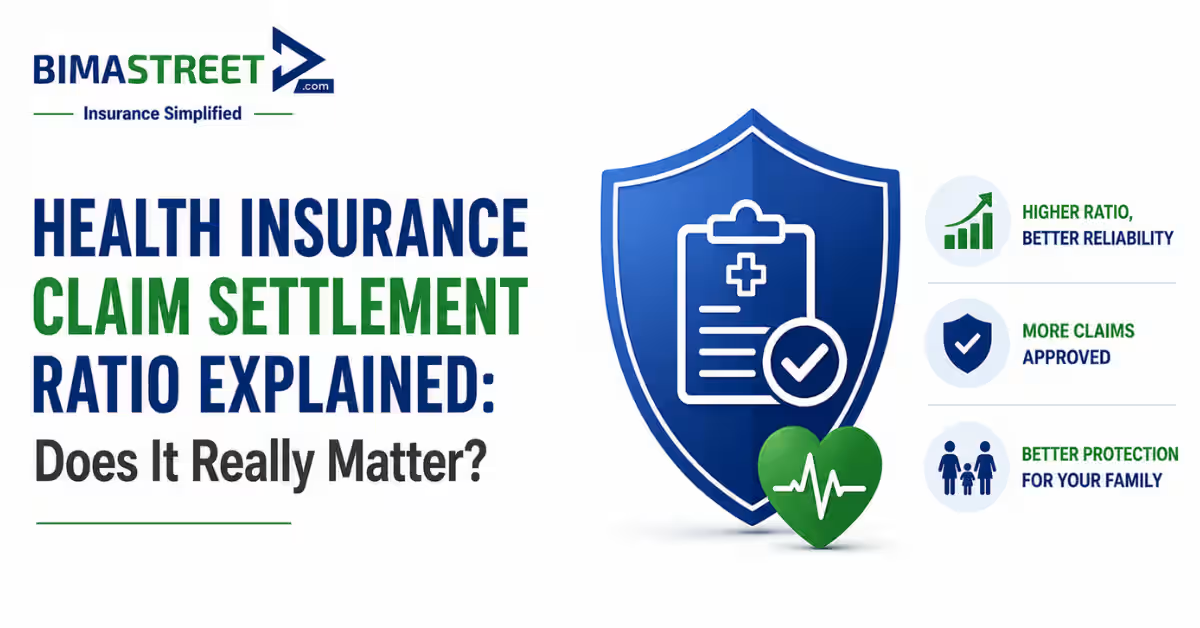
Purchasing health insurance is not simply about finding the cheapest premium or maximum coverage The Claim Settlement Ratio Health Insurance
is one of the crucial parameters that we used to analyze while finalizing which policy should we go ahead with.
Because a policy is only good if an insurer pays out during its time of need
But there are many who do not understand what the Claim Settlement Ratio Health Insurance stands for Some of you might think that if we go with the insurance company
with a higher claim settlement ratio then we would not have to deal with the bumps
while claiming and some just ignore this factor completely The reality is a bit of both
In this guide, we’ll explain what the Claim Settlement Ratio Health Insurance means, how it’s calculated, why it matters,
and what other factors you should consider before buying a health insurance policy
What Is the Claim Settlement Ratio in Health Insurance?
Understanding the Basics
Claim Settlement Ratio in Health Insurance is basically the ratio of the number of claims settled to the total received by an insurance company in a financial year
Say an insurer gets 10,000 health insurance claims and settles 9,700 of them. Its claim settlement ratio will be 97%.
A higher claim settlement ratio typically means that the insurer has settled a significant percentage of claims but this should not be your only criterion to consider when evaluating an insurance compan
Why Does the Claim Settlement Ratio Matter?
A Key Indicator of Reliability
This means that if an insurance company has a good claim settlement ratio, the policyholders can be assured that it has been processing and settling genuine claims effectively over the years
It can help you:
- Assess an insurer’s reliability.
- Compare different insurance companies.
- Understand the company’s claim-handling performance.
- Confidence before purchasing a policy
Yet, insurers with high settlement ratios also can deny claims that don’t meet the condition of their policy
How Is the Claim Settlement Ratio Calculated?
A Simple Formula
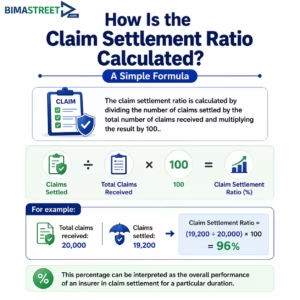
The claim settlement ratio is calculated by dividing the number of claims settled by the total number of claims received and multiplying the result by 100
For example:
- Total claims received: 20,000
- Claims settled: 19,200
Claim Settlement Ratio = (19,200 ÷ 20,000) × 100 = 96%
This percentage can be interpreted as the overall performance of an insurer in claim settlement for a particular duration
Does a Higher Claim Settlement Ratio Always Mean Better?
Not Necessarily
A higher Claim Settlement Ratio Health Insurance is a good indicator, but just having a high settlement ratio doesn’t mean that the insurer is also your best
A high ratio doesn’t reveal:
- How quickly claims are settled.
- The average claim amount paid.
- Customer service quality.
- Reasons behind claim rejections.
- According to the cashless claim lay process
Never solely depend on a claim settlement ratio, evaluate multiple thing
Other Factors to Consider Before Buying Health Insurance
Look Beyond the Numbers
Compare These To Choose Health Insurance Policy
- Sum insured
- Premium amount
- Waiting periods
- Network hospitals
- Cashless claim facility
- Room rent limits
- Co-payment clauses
- Policy exclusions
- Day-care procedure coverage
- Customer support
A well balanced comparison helps you select the policy that most suits your healthcare needs
Common Reasons Why Health Insurance Claims Get Rejected
Avoid These Mistakes
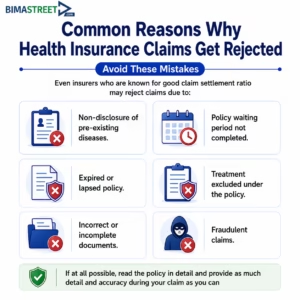
Even insurers who are known for good claim settlement ratio may reject claims due to:
- Non-disclosure of pre-existing diseases.
- Policy waiting period not completed.
- Expired or lapsed policy.
- Treatment excluded under the policy.
- Incorrect or incomplete documents.
- Fraudulent claims.
If at all possible, read the policy in detail and provide as much detail and accuracy during your claim as you can
Tips to Improve Your Claim Approval Chances
Best Practices for Policyholders
To ensure a smooth claims experience
- Disclose your complete medical history.
- Renew your policy before it expires.
- Understand waiting periods and exclusions.
- Choose network hospitals whenever possible.
- Keep all medical records and bills safely.
Inform your insurer immediately after hospitalization Taking these steps can help to simplify the claims process immensely
Frequently Asked Questions
What is considered a good claim settlement ratio?
Usually, insurers with a high claim settlement ratio year after year are trustworthy.
There, it is also a must to compare the policy features, coverage and customer service as we
Can a claim still be rejected even if the insurer has a high settlement ratio?
Yes. Policies can still deny a claim if it does not meet the policy terms, waiting periods, or documentation requirements.
Should I buy insurance based only on the claim settlement ratio?
No. While you can check the claim settlement ratio, the coverage features, exclusions, premium quote from others,
hospital network and waiting period for declaring a pre-existing disease also add up to your decision in choosing a health insurance policy based on the claim settlement ratio
Conclusion
Claim Settlement Ratio Health Insurance is considered one of the most important factors that indicate how well an insurer has been handling health claims, but it should never be the sole factor guiding your decision.
A large ratio may simply be indicative of a strong record of settlements, but it does not mean that all claims submitted will be approved.
When purchasing a health insurance policy, consider the claim settlement ratio in conjunction with factors such as policy coverage, waiting periods, exclusions, hospital network
premium and customer service. Investing in a good decision today can mean financial freedom and peace of mind tomorrow when medical emergencies do arise
At BimaStreet, we believe that the right guidance is just as important as the right policy.
When you understand what insurance advisors look for before recommending a plan, you’re in a much better position to choose health insurance that protects your family today and in the years ahead