
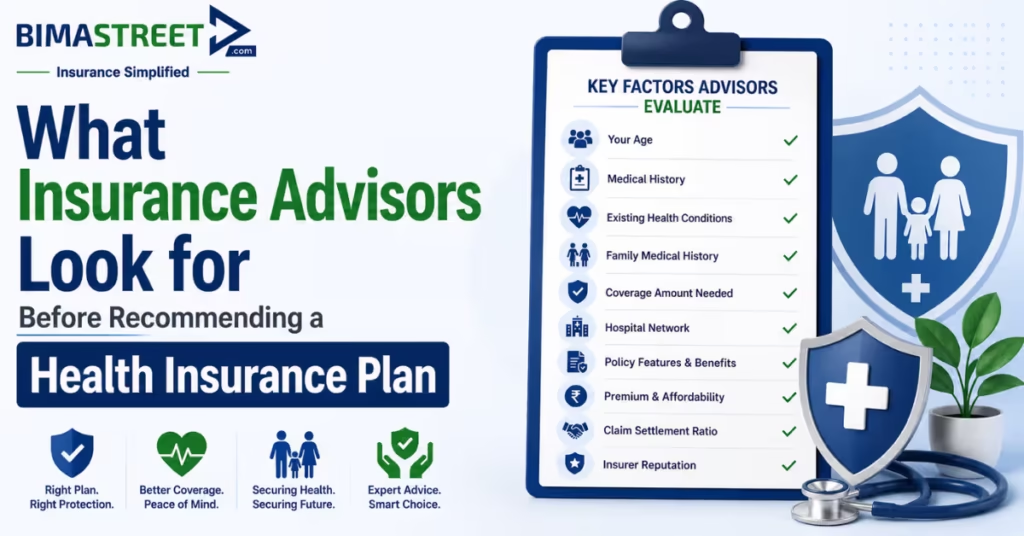
What Insurance Advisors Look for Before Recommending a Health Insurance Plan
Separating the good from bad health insurance plans may seem like child’s play in the beginning. The average consumer compares premiums, considers the limit amount, and sells the policy that seems to offer the best value. However, seasoned Health insurance advisors don’t base their recommendations like that. One family’s healthcare needs, financial goals and medical risk is not another clinical scenario. A policy that suits one may not do so for another. A health insurance advisors looks at much more than the brochure before suggesting any plan, which is why Advisors look beyond just price to your lifestyle, family profile, future healthcare needs and the policy’s long-term value Understanding this approach can help you make better insurance decisions and choose a plan that truly protects your family Why Health Insurance Advisors Don’t Recommend the Same Policy to Everyone There are supposedly many “best” health insurance policies. In reality, there isn’t. An Health insurance advisors knows that different families have their own way of prioritizing Older individuals are the reason for higher coverage required by multiple families While others may need maternity benefits, young working professionals may strive for something cheaper to protect themselves from being thrown into a mountain of medical debt due to unforeseen circumstances Health insurance advisors are not there to sell you the most expensive plan. That is to get a grasp on the customers needs and prescribe a plan that strikes the best balance between protection, affordability, and future coverage Understanding Your Family Before the Policy Prior to comparing insurers, seasoned advisors get the scoop on those being insured. Family Size and Age A couple with small children needs different healthcare than a retired couple. Advisors consider: Number of family members Age of each member Presence of senior citizens Future family planning These things will affect the coverage amount and policy type Existing Medical Conditions Medical history holds a significant relevance in choosing the right health insurance. An advisor may ask about: Diabetes Blood pressure Heart-related conditions Previous surgeries Ongoing treatments Being fully upfront is key to pinpointing policies that provide appropriate coverage while minimizing the chance of claims complications in the future How How Health insurance Advisors Evaluate a Health Insurance Plan Your advisors will then compare policies based on practical features rather than advertisement when they understand your healthcare needs Coverage That Matches Your Needs Advisors do not just come up with your max coverage, they will focus on what makes sense for your family. They evaluate Sum insured Family floater or individual plans Day-care procedures Pre and post-hospitalization benefits Critical illness coverage The aim is to advise on coverage based on changes in your current and later healthcare needs Claim Experience Matters Getting a policy is just the start. We only recognise the true value of our health insurance when we see a claim This is why advisors carefully review: Cashless treatment availability Claim settlement process Hospital network Customer support Claim assistance An excellent claim-supporting policy can ease the burden of a tough medical scenario greatly Looking Beyond the Premium Many buyers ask only one question: “Which policy costs less?” Health Insurance advisor ask different questions. Does the policy have room rent restrictions? Are there co-payment clauses? What are the waiting periods? Are there important exclusions? Will the policy continue to meet future healthcare needs? These factors are generally more important than the premium itself. Questions Insurance Advisors Usually Ask When you first consult, most advisors will ask many questions about your personal and financial situation. This should be the way, as better understanding give me a chance to propose better recommendations Some common questions include: Who needs health insurance? What is your monthly budget? Do you already have employer health insurance? Which hospitals do you usually visit? Have you purchased health insurance before? Are you planning for long-term family healthcare? The answers help advisors recommend policies that fit your specific requirements instead of offering a generic solution Common Mistakes Buyers Make Without Expert Guidance But if you buy health insurance without studying the fine print of your policy, then it is easy to make mistakes. Some of the most common ones include: Choosing a policy based only on premium Selecting inadequate coverage Ignoring waiting periods Not checking policy exclusions Overlooking network hospitals Hiding existing medical conditions Purchasing without comparing multiple policies In reality, all of these mistakes can be easily avoided if you take time to read and understand the policy before purchasing. Advisors Quick Recommendation Checklist Usually a good & experienced advisor would check the following before recommending any health insurance plan. Family healthcare needs Medical history Suitable coverage amount Waiting periods Network hospitals Policy exclusions Claim support Long-term affordability Future healthcare requirements Conclusion You should never choose a health insurance policy only based on advertisements or premium costs. The right policy is a policy that meets you and your family’s current healthcare needs, financial objectives, and long term protection requirements This is exactly how Few insurance agents give advice. They first assess your circumstances, analyze plans meticulously and aim to help you reach an educated decision rather than just selecting the least expensive option At BimaStreet, we believe that the right guidance is just as important as the right policy. When you understand what insurance advisors look for before recommending a plan, you’re in a much better position to choose health insurance that protects your family today and in the years ahead