
Family Health Insurance

Best Health Insurance Plans Covering Pre-Existing Diseases - Health Insurance for Pre Existing Diseases
BimaStreet Blogs, Health insurance

Best Health Insurance Plans Covering Pre-Existing Diseases

Buying health insurance may be more challenging when you already have a pre-existing medical condition. But many insurers do provide health insurance for pre existing diseases, subject to certain terms and conditions It is important to carefully understand how health insurance for pre existing diseases works, as you may not be able to get sufficient coverage to meet all your requirements Instead of simply comparing the premiums, policy buyers should assess the waiting period, coverage, sum insured, exclusions, network hospitals and other factors to select the right health insurance company to buy a policy from. The following guide discusses important considerations that come into play when somebody is thinking of buying a health insurance plan for pre-existing disease What Is a Pre-Existing Disease? Understanding the Term A pre-existing disease usually refers to any medical condition that the applicant already suffers from and was present before the issuance of health insurance Examples may include certain conditions such as: Diabetes. Hypertension. Asthma. Thyroid disorders. Certain heart conditions However, policy wordings may vary based on the insurer and the policy issued therefore, each case must be considered based on the policy terms Can You Get Health Insurance With a Pre-Existing Disease? Yes, But Conditions May Apply Having a pre-existing disease does not guarantee that the buyer will not get health insurance Based on the applicant’s profile, the policy buyer must carefully evaluate if the conditions stated by the insurer are acceptable to them A policy with pre-existing disease coverage may sometimes have a waiting period. Some of the factors to consider when buying health insurance for pre existing diseases include A waiting period for the pre-existing condition. Medical underwriting. Specific exclusions. Additional premium in some cases. Coverage subject to certain conditions The underwriting criteria will depend on the individual’s profile and the insurer’s policy What Is a Waiting Period? One of the Most Important Factors A waiting period is the duration for which any illness or treatment that falls under a specific category will not be covered by a health insurance policy. Health insurance policies may have a waiting period for pre-existing diseases depending on the issuing company’s criteria. Before buying health insurance for pre existing diseases, the applicant should know: Length of the waiting period. Conditions covered by the waiting period. Treatments included or excluded. Whether the waiting period can be reduced under any available option. Not all health insurance policies terms and conditions are the same Therefore, a buyer must assess an insurer’s policy wording concerning the terms of coverage for any pre-existing disease. What Should You Look for in a Health Insurance Plan? Compare More than the Premium When comparing health insurance plans, consider: Sum insured. Pre-existing disease waiting period. Hospitalisation coverage. Network hospitals. Room-rent limits. Co-payment requirements. Exclusions. Claim process. Renewal conditions A policy with a slightly higher premium may offer features that are more suitable for your healthcare needs Why Full Disclosure Is Important Be Honest About Your Medical History One of the best ways to ensure a healthy claims process is to give accurate information about one’s personal and family medical history When purchasing health insurance, an applicant must honestly disclose all the details an insurer asks for during the application process Not all applications are approved instantly Sometimes, an applicant must provide additional information before approval Do not hide or incorrectly report: Existing diseases. Previous treatments. Current medication. Previous hospitalisation. Relevant medical history requested by the insurer Providing false information about one’s medical history can affect future claims How to Compare Health Insurance Plans Make an Informed Choice To help identify the better plan, an applicant should compare the policies based on Coverage amount Waiting period. Premium. Exclusions. Hospital network. Co-payment. Claim service. Policy terms. The cheapest insurance coverage option available may not always be the best choice. Each person’s health insurance needs are unique and must be based on their personal circumstances. Can Coverage Increase Later? Review Your Health Insurance Regularly Your healthcare requirements may change over time. As your income, family size, and medical needs change, you may need to review your coverage. Depending on the insurer and policy terms, you may have options such as: Increasing the sum insured at renewal. Adding suitable coverage. Purchasing an additional policy. Considering a super top-up policy. Any increase in coverage remains subject to the insurer’s terms and underwriting requirements Common Mistakes to Avoid Don’t Choose a Policy in a Hurry An applicant should avoid making the following common errors when purchasing health insurance for pre existing diseases Choosing a plan only because it has a low premium. Ignoring the waiting period. Hiding medical conditions. Not checking exclusions. Ignoring co-payment clauses. Failing to check the network hospital list. Not reading the policy wording Reviewing the terms and conditions of any health insurance policy before buying it reduces the likelihood of future misunderstandings or rejections when making a claim.   Frequently Asked Questions Can diabetes be covered under health insurance? When purchasing health insurance, an applicant with diabetes should find out if this illness will be covered under the waiting period Can I buy health insurance if I have hypertension? A person with hypertension can buy health insurance according to the insurer’s policy conditions Is a pre-existing disease covered immediately? In most cases, there may be a waiting period before the coverage of a pre-existing disease thus, a buyer should check the terms and conditions of any policy. Should I disclose my existing medical conditions? When purchasing health insurance, an applicant should give accurate information about their personal and family medical history Conclusion The selection of a health insurance plan takes more than simply comparing the premiums. The waiting period, coverage, exclusions, co-payment, and network hospitals and renewal terms and conditions are equally crucial before purchasing a health insurance policy To avoid future claim rejections and misunderstandings, a buyer must provide truthful information about their personal and family medical history when filling out the application and ask all the necessary questions before signing the policy document A
Best Health Insurance for Parents What Coverage Should You Look For - Health Insurance for Parents
BimaStreet Blogs, Health insurance

Best Health Insurance for Parents: What Coverage Should You Look For?

The years go by, the need for healthcare increases as our parents grow older. You will also be subjected to regular medical checkups, hospitalizations, surgeries and treatment of age related diseases that can cost a lot of money. These costs can financially strain the family without proper coverage. Hence, investing in the correct Health Insurance for Parents is indeed a thoughtful yet financially responsible decision An appropriate policy not only reimburses hospitalization charges but also serves as a mental balm during medical emergencies So choosing a plan is not as simple as possible. There are lots of insurers, choices in coverage and waiting periods, as well as policy exclusions Thus, it can be hard to know exactly what matters. In this article, we will help you understand what health insurance for parents is and how you should choose the top Health Insurance for Parents along with the coverage that you should have before purchasing Why Is Health Insurance for Parents Important? Rising Medical Costs Make Insurance Essential Healthcare costs are rising dramatically within India, a decade ago. When parents get older, the risk for chronic diseases like diabetes, hypertension, heart disease, arthritis and kidney complex increases as well. A comprehensive Health Insurance for Parents helps: Reduce the financial burden of hospitalization. Cover major medical treatments. Provide access to quality healthcare. Protect your savings during emergencies. Ensure timely treatment without worrying about expenses Purchasing health insurance in advance is also helpful to complete the waiting period before any major health issues occur. What Should Health Insurance for Parents Cover? Essential Features to Look For When you compare health insurance plans, ensure that the policy includes Hospitalization expenses Pre and post-hospitalization coverage Day-care procedures ICU expenses Ambulance charges Diagnostic tests Cashless treatment at network hospitals Annual health check-ups Domiciliary hospitalization (where available) Organ donor expenses (if covered) A comprehensive plan is crucial to save you money when an unexpected medical emergency arises. Check the Waiting Period Carefully Understand When Coverage Begins Waiting periods for the following are a part of most health insurance policies Pre-existing diseases Specific illnesses Maternity benefits (where applicable) Those with existing medical conditions, a slightly shorter waiting period may be better suited to the needs of parents. Which is why it is advisable to always compare waiting period clauses before buying a plan. Consider Coverage for Pre-Existing Diseases A Crucial Factor for Senior Parents A lot of the older parents now have conditions including: Diabetes High blood pressure Asthma Thyroid disorders Heart disease Most insurers will cover these once the relevant waiting period has passed.  Always mention the complete medical history of your parents so that there is no dispute at the time of claim settlement Look for a Wide Network of Hospitals Cashless Treatment Can Save Valuable Time Modern health insurance provides the most significant benefit of cashless hospitalization Choose an insurer with: A large network of hospitals. Good hospitals near your parents residence. Easy cashless claim facilities. Quick claim approval process This helps quick treatment when an emergency occurs without having to arrange huge amounts of money Choose an Adequate Sum Insured Don’t Underestimate Future Medical Costs Every year, health costs continue to increase. If one suffers from serious surgeries or stay in hospital for weeks, a low coverage sum may turn out to be insufficient When you choose a Health Insurance for Parents: Current medical conditions. Age. Inflation in healthcare costs. Family medical history. City of residence Opting for a sufficient sum assured gives you a better long-term cover Check Co-Payment and Sub-Limits Read the Fine Print Major Benefits Offered in Senior Citizen Health Insurance Plans Co-payment clauses Room rent limits Disease-specific limits Treatment caps This knowledge can enable you to prepare for how much you might pay out of pocket during admissions Compare Claim Settlement Ratio and Customer Service Reliability Matters A best health insurance company should provide A strong claim settlement record. Efficient customer support. Quick claim processing. Transparent policy terms. Easy cashless hospitalization For a better claim experience, do business with a reputable insurer Common Mistakes to Avoid Don’t Make These Buying Errors Avoid these common mistakes: Buying insurance based only on premium. Hiding pre-existing diseases. Ignoring waiting periods. Choosing insufficient coverage. Not checking hospital networks. Forgetting to compare policy exclusions. Delaying the purchase Purchasing the correct policy in advance can save you a lot of money later on Frequently Asked Questions What is the best age to buy health insurance for parents? The earlier, the better. It is also typically cheaper if one gets the policy at a younger age, and there may be shorter waiting periods until claims are covered Can parents with existing medical conditions get health insurance? Yes. The most important thing to remember is that all insurers cover pre-existing diseases, but nearly all of them have a waiting period wherein you cannot make claims against any illness related to the pre-existing one Should I buy a family floater or separate policy for parents? If either of your parents are above 60 or have pre-existing health conditions, stand alone health insurance plans would be a better option than adding them to the family floater plan Conclusion Selecting an appropriate Health Insurance for Parents is one of the best investments you can do to secure your family in future Having a good policy will solve one problem of rising medical costs reduce financial worries during emergencies and ensure that your parents get high-quality health care in their most urgent time of need. Always compare the coverage benefits, waiting periods, available hospital network, claim settlement history and co-payment clause and exclusions of policy before you purchase any plan The decision that you make today can go a long way in ensuring that your parents have financially secured and peace of mind for years to come. At BimaStreet, we believe that the right guidance is just as important as the right policy. When you understand what insurance advisors look for before recommending a plan, you’re in a much better position

Family Floater vs Individual Health Insurance Which Policy Saves More Money
BimaStreet Blogs, Health insurance

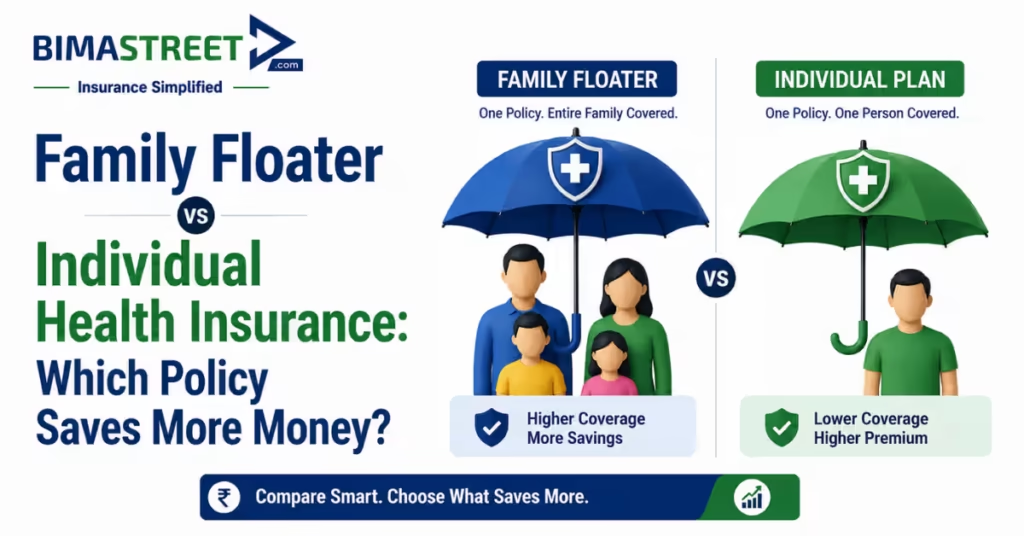
Family Floater vs Individual Health Insurance: Which Policy Saves More Money?

It is essential to select the best health insurance policy for you and your family as it will be one of the most significant financial choices you will make in your life ahead As annually more and more health care costs are escalating, so having sufficient wellbeing insurance coverage is not a choice but rather a necessity. But, most of them face a challenge between Family Floater vs Individual Health Insurance. Finally, the other question is Whether to buy one policy for the family or each family member should be on a separate health insurance plan? The response is determined by your family size, age, medical history and economic goals This guide breaks down Family Floater vs Individual Health Insurance, how each of those work, their pros and cons, and which option can save you the money in the long run What Is Family Floater Health Insurance? One Policy for the Entire Family A Family Floater Health Insurance policy comes with a common sum insured which can be utilized by all members covered under the same policy. A family floater plan (say a ₹10 lakh plan that covers you, your spouse and two children) allows any of the insured to avail of cover as and when he/she is hospitalized till the limit is exhausted This policy suits young families, as the chance that several family members would require hospitalization at the same time is minimal. What Is Individual Health Insurance? Separate Coverage for Every Person Individual Health Insurance A separate sum insured is provided for each insured person. If there are four family members with ₹5 lakh policy each, all four will receive a cover amount of ₹5 lakh each When a claim is made by one party, it doesn’t decrease the coverage available to any other policyholder. This alternative is especially useful for those families who have parents or any other member in their family with prior ailments   Family Floater vs Individual Health Insurance: Key Differences Understanding the Main Comparison Key Points to Consider While Validating Family Floater vs Individual Health Insurance: Coverage structure Premium cost Number of family members Age of insured persons Medical history Claim flexibility Long-term affordability This helps to understand the differences and pick a policy suitable to your health care needs. Benefits of Family Floater Health Insurance Why Many Young Families Prefer It Advantages of a family floater plan are as follows: Family plan with single premium Less pricey than buying multiple separate policies. Easier policy management. Cumulative sum insured for family members. Convenient renewals If your family members are generally healthy, a family floater policy can provide excellent value for money Benefits of Individual Health Insurance Why Separate Policies Can Be Better There are also unique benefits to individual plans: Individual coverage for each insured person. Others are not influenced by the claim made by one person. Better for senior citizens. Best for Chronic Illness You have more freedom regarding your coverage amounts Other changes in cover and multi-policies often demand individual policies for families to meet their healthcare needs Which Policy Saves More Money? It Depends on Your Family’s Needs Family Floater Vs Individual Health Insurance: Which One Do You Need? A Family Floater policy is likely to help save you more if: You are a young couple. You have small children. There are no significant background diseases in your family. Everyone is generally healthy If Individual Health Insurance is a better investment, You have elderly parents. A relative regularly incurs medical expenses. Multiple members may require hospitalization. You want each of them given separate protection A bad policy choice either results in unnecessarily high premiums or underinsurance Factors to Consider Before Buying Health Insurance Make an Informed Decision Before purchasing any policy, evaluate Age of each family member. Existing medical conditions. Number of dependents. Annual healthcare expenses. Waiting periods. Hospital network. Claim settlement ratio. Room rent limits. Day-care procedures. Policy exclusions This move allows you to make a more informed financial decision by weighing these features against each other Common Mistakes to Avoid Don’t Make These Health Insurance Errors Avoid these common mistakes: Choosing the cheapest premium only. Ignoring waiting periods. Not reading policy exclusions. Buying insufficient coverage. Forgetting annual renewals. Not comparing different insurers. Delaying health insurance purchase. The right policy today can save you a world of financial heartache tomorrow Frequently Asked Questions Is Family Floater cheaper than Individual Health Insurance? Generally, yes. Family floater plans tend to be cheaper than independent policies for each member of the family, particularly for young and healthy families Can senior citizens be included in a Family Floater policy? Yes, but if parents are added it could more than double the premium. In many instances, buying separate individual plans for seniors is likely to be a better solution Can I switch from Family Floater to Individual Health Insurance? Yes. Several insurers also allow policy holders to switch from a family floater plan to an individual policy as per their terms Conclusion Family Floater vs Individual Health Insurance not about finding the better of the two but selecting what is best for your family. If you have a young and healthy family, you can get significant cover via a family floater plan but will be charged less in premium. If your household contains an aging parent or high-risk individuals, on the other hand, individual health insurance might prove considerably more beneficial in a long-term financial perspective You may also compare the various features, limits of coverage, waiting periods, eligible hospital network, settlement records for claims before arriving at a decision One cannot emphasize the importance of investing in good health insurance here as financially protecting your family today will lead to peace of mind tomorrow. At BimaStreet, we believe every family deserves coverage that matches their unique needs. Understanding how much health insurance coverage you really need is the first step towards making a confident and informed insurance decision.

Contact Details

Support mail:

care@bimastreet.com

Claim mail:

claim@bimastreet.com

For Other Query:

info@bimastreet.com

Phone Number:

(+91)9391009482/84/89

BIMASTREET is the online insurance platform of Amaze insurance brokers pvt ltd

Corporate Office :- #403, THE LEGEND, Metro Pillar C1338, Motilal Nehru Nagar, Begumpet, Hyderabad – 500016

Regd Office: – Ground Floor, Villa No.10, Richmond Villas, Near Glendale International School, Hydershakote, Hyderabad-500086.

Website Approved By IRDAI(Govt. of india)
ISNP Ref: IRDAI/INT/ISNP/2021/79
IRDA License Number: 549
Licensed on: 24/02/2025
Valid Upto: 23/02/2028

Disclaimer: Disclaimer: Insurance is the subject matter of solicitation. Visitors are hereby informed that their information submitted on the website may be shared with insurers. The product information for comparison displayed on this website is of the insurers with whom our company has an agreement. Product information is authentic and solely based on the information received from the Insurer. The information provided on this website/page is for information purpose only. Bimastreet.com does not in any form or manner endorse the information so provided on the website and strives to provide factual and unbiased information to customers to assist in making informed insurance choices.

Scroll to Top